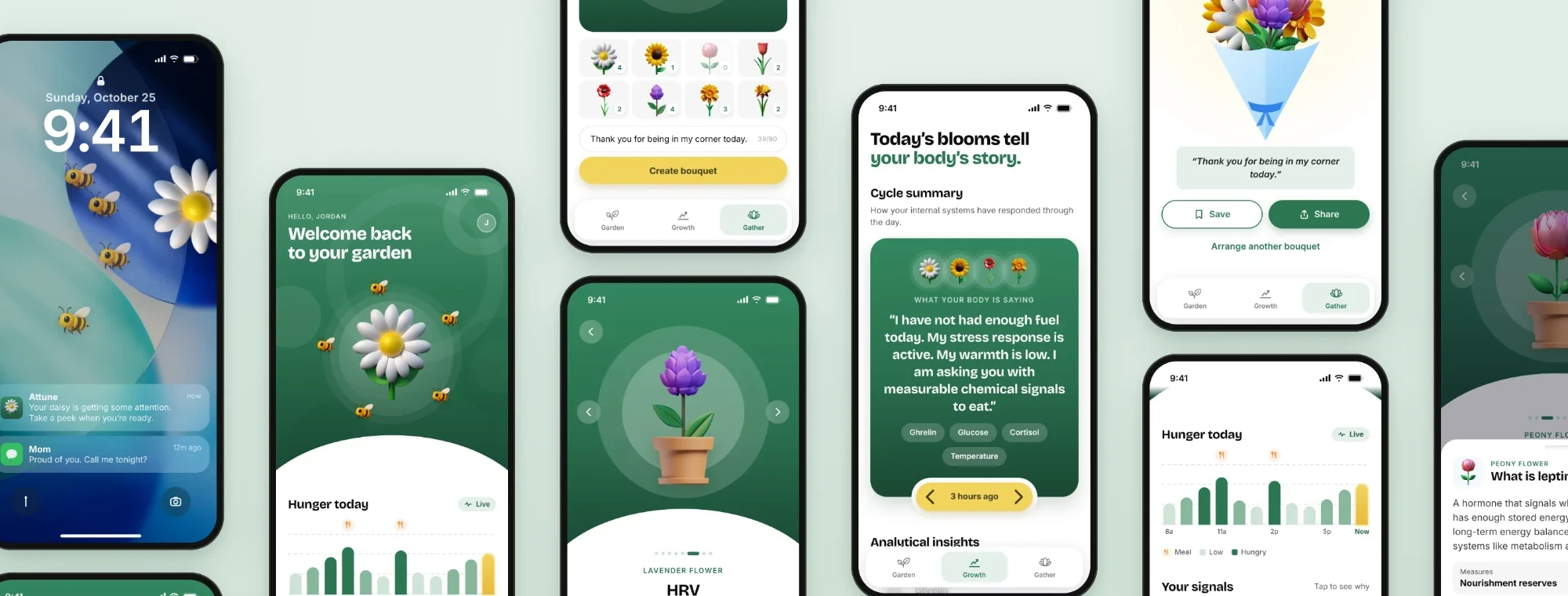
Helping people with anorexia understand hunger again.
A recovery app and wearable that turns invisible biosignals into visuals, helping people with anorexia see hunger and fullness when their own cues are unreliable.
- Role
- Product Designer
- Timeline
- 4 days
- Tools
- Figma/ Figma make
- Claude
- Chat GPT
- Team
- 2 Product Designers
Contributions
Research
- Interoception research
- Literature synthesis
- Biosignal landscape
Analysis
- Personas
- Concept & ideation
- Design principles
Design
- Screens in Figma Make
- Visual system
- Presentation & pitch
00 Overview
- About
- FigBuild is Figma’s annual student design-a-thon: a short, intensive sprint to design and build an original product concept, judged on problem framing, UX, and storytelling.
- The challenge
- Design for a sense beyond the traditional five: a speculative tool that makes an internal bodily experience more perceivable, interpretable, or actionable.
- What we built
- Attune, a wearable and app for people recovering from anorexia nervosa. It turns hunger biosignals into a visual garden, helping them eat with confidence and rebuild trust in their body.
01 Research
Understanding the Premise
Given the time constraints, we relied on secondary research and academic literature to build a foundational understanding of our users and identify key problem spaces. Among these, one area of research stood out as particularly influential in shaping our direction:
Jenkinson et al. 2018
Self-reported interoceptive deficits in eating disorders: A meta-analysis of studies using the eating disorder inventory
Interoceptive signals remain unreliable even after eating behavior normalizes pointing to a possible endophenotype rather than a temporary symptom.
Design implication
The app needs to support long-term scaffolding not just acute recovery. It must remain useful beyond the crisis phase.
Khalsa et al. 2022
Gastrointestinal interoception in eating disorders: Charting a new path
Body mistrust , not body dissatisfaction is the strongest predictor of illness severity. The brain forms inaccurate predictions about internal states and struggles to update them.
Design implication
The primary goal is rebuilding trust in the body as a reliable source of information not appearance, performance, or behavior change.
Treasure et al. 2020
The value of including families in the treatment of anorexia nervosa
Family involvement in treatment reduces hospital bed use and improves wellbeing for both patients and family members. Social and emotional functioning is recognized as both a risk factor and a maintaining factor for anorexia nervosa.
Design implication
The bouquet sharing feature in Gather exists for this reason — giving patients a gentle, low-pressure way to bring the people around them into their recovery without requiring clinical language or difficult conversations.
70M+
People live with eating disorders
10,200
Deaths per year from EDs
-20%
Ever receive treatment
167hrs
Clinician blind spot between
Gap in the Treatment
For someone in treatment for an eating disorder, a clinician appointment happens roughly once a week. That leaves 167 hours every week where the patient is alone with a body they do not trust, reading signals they cannot accurately interpret, and making decisions based on perceptions that are neurologically compromised.
How do you measure and display an interoceptive sense in a way that feels safe, not clinical for someone whose interoceptive system is unreliable?
Exploring the interoception landscape
No wearable today passively measures hunger hormones like ghrelin and leptin. So we designed one: speculative, but grounded in where the technology is heading.
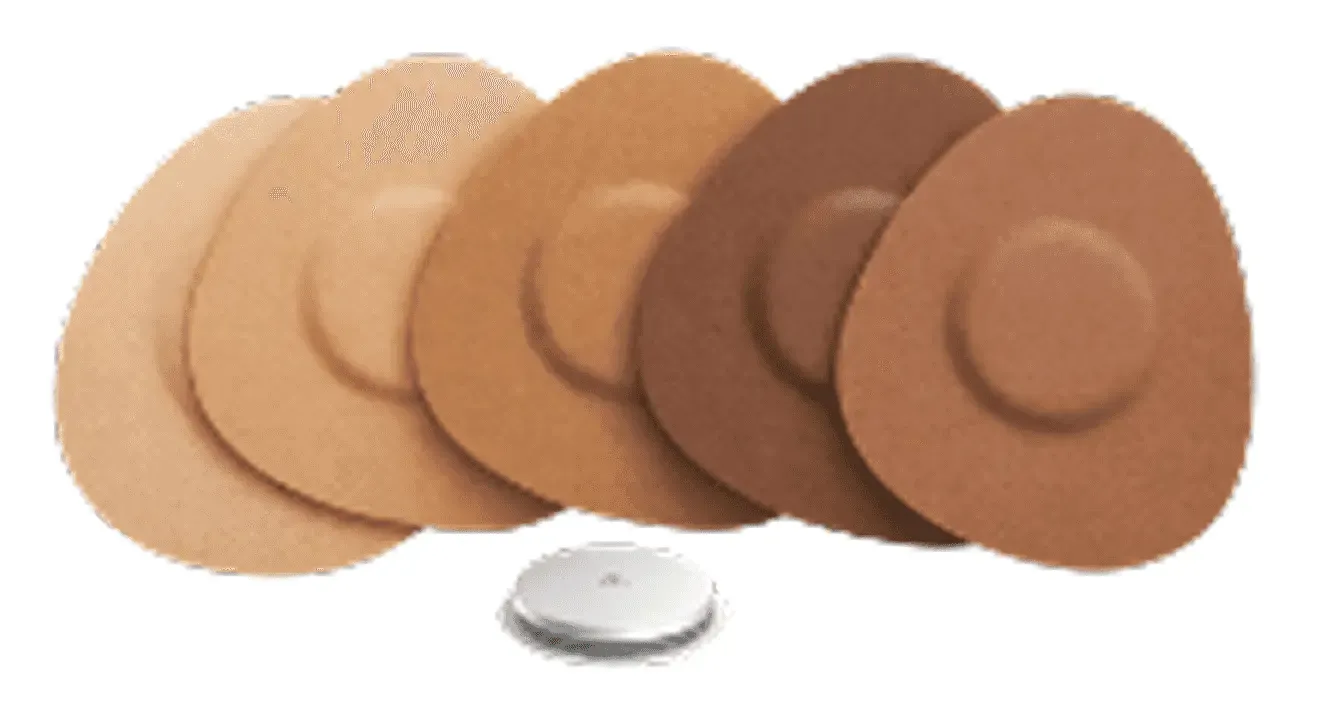
Interoceptive Biomarker Monitor (IBM)
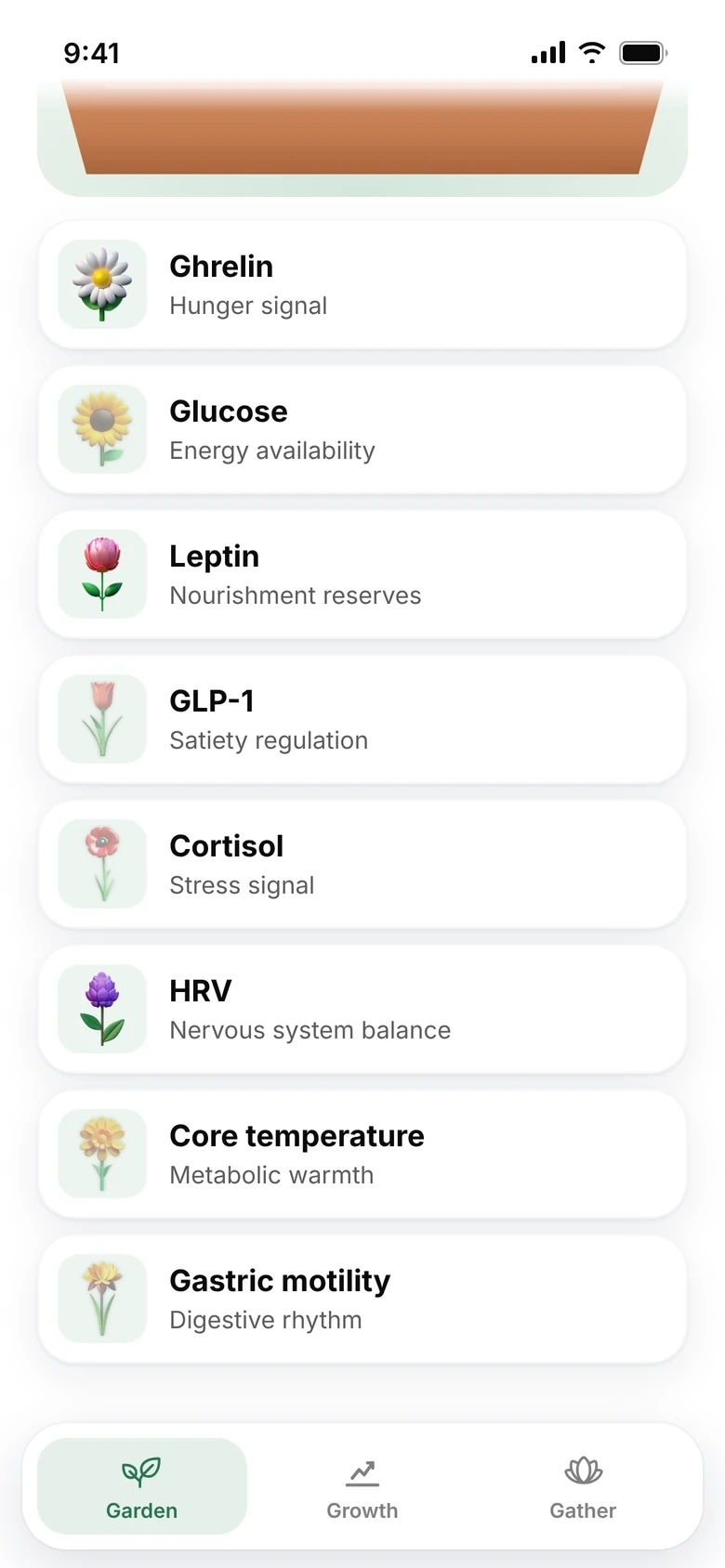
A discreet wearable patch that tracks the biomarkers behind hunger (glucose, cortisol, ghrelin, leptin, HRV, GLP-1) and feeds two experiences: the patient’s app and the clinician’s view.
Who are we building for
Attune works alongside therapy, not instead of it. So we designed for both sides: the patient and her doctor.
Primary · Patient
Celine, 17
Anorexia Nervosa · Restrictive · Outpatient
“I know what I’m supposed to eat. I just can’t always make myself do it.”
- Wants
- To feel normal around food and friends.
- Driven by
- Perfectionism and low awareness of hunger cues.
- Blocked by
- Shame with clinicians and forgetting what happens between visits.
- Needs
- Private tracking that shows her body’s state without triggering data.
Secondary · Doctor
Dr. Reyes, 41
ED Specialist
“Patients tell me what they think I want to hear.”
- Wants
- To catch deterioration early, between visits.
- Driven by
- Clinical caution and evidence-backed tools.
- Blocked by
- Two-week data gaps and patients who minimise.
- Needs
- Continuous trend data with smart alerts that lighten her load.
Core Design Principles
Visual and playful on purpose: expressive and metaphorical, not medical.
Witness Not Instruct
Name the state, never direct. “I’m rising,” not “you should eat.”
Felt Language Only
No numbers, ranges, or clinical terms for the user. Ever.
No Pass/Fail
No red or green. Observe, don’t evaluate.
Final designs
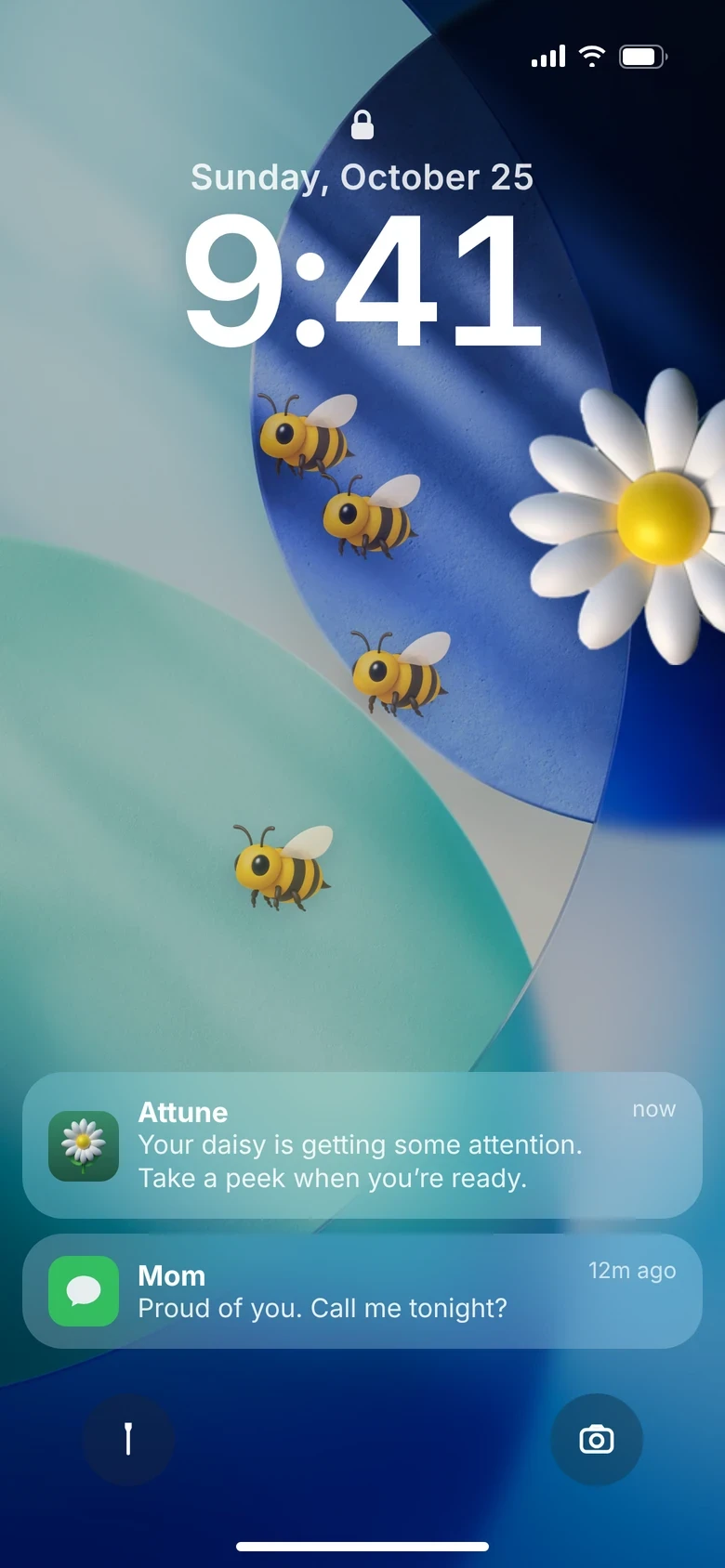
Lock screen
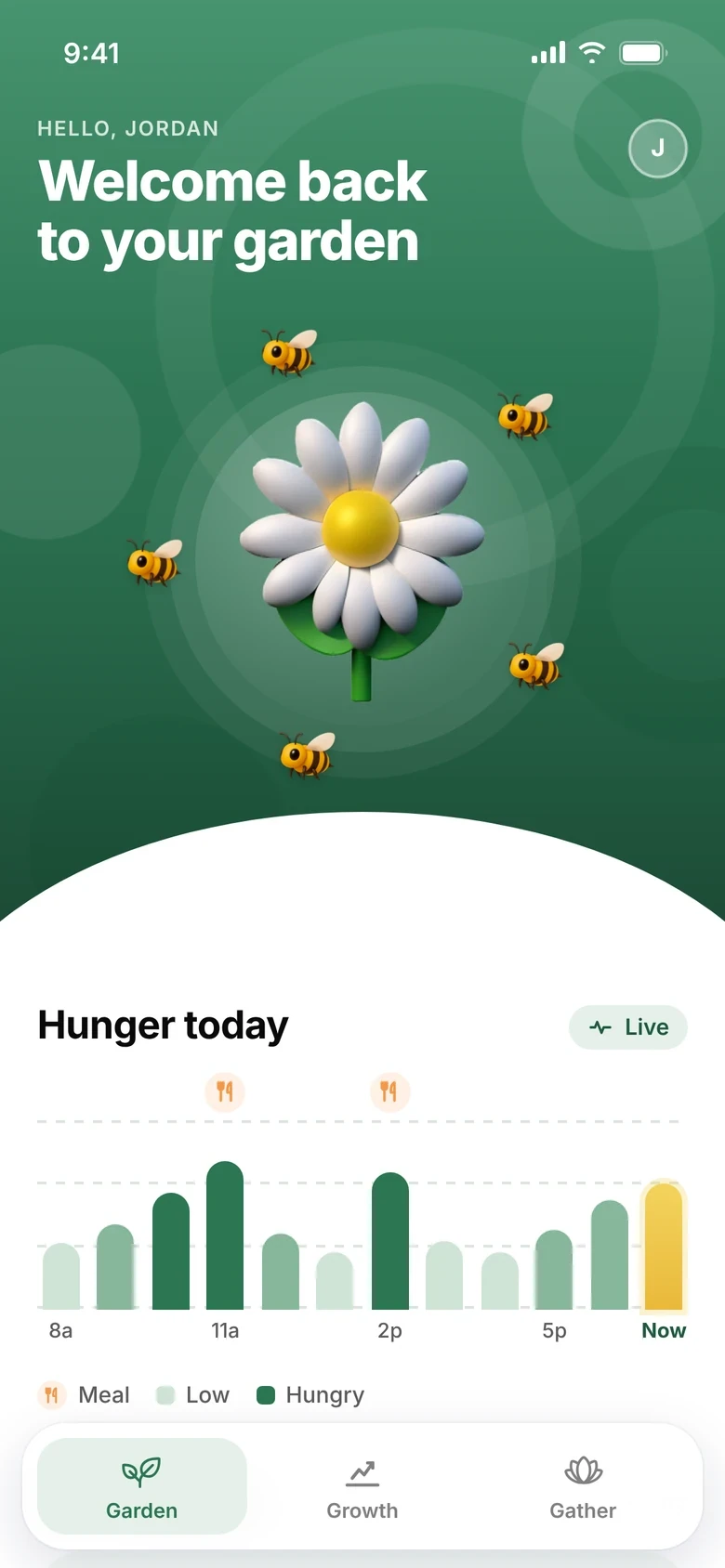
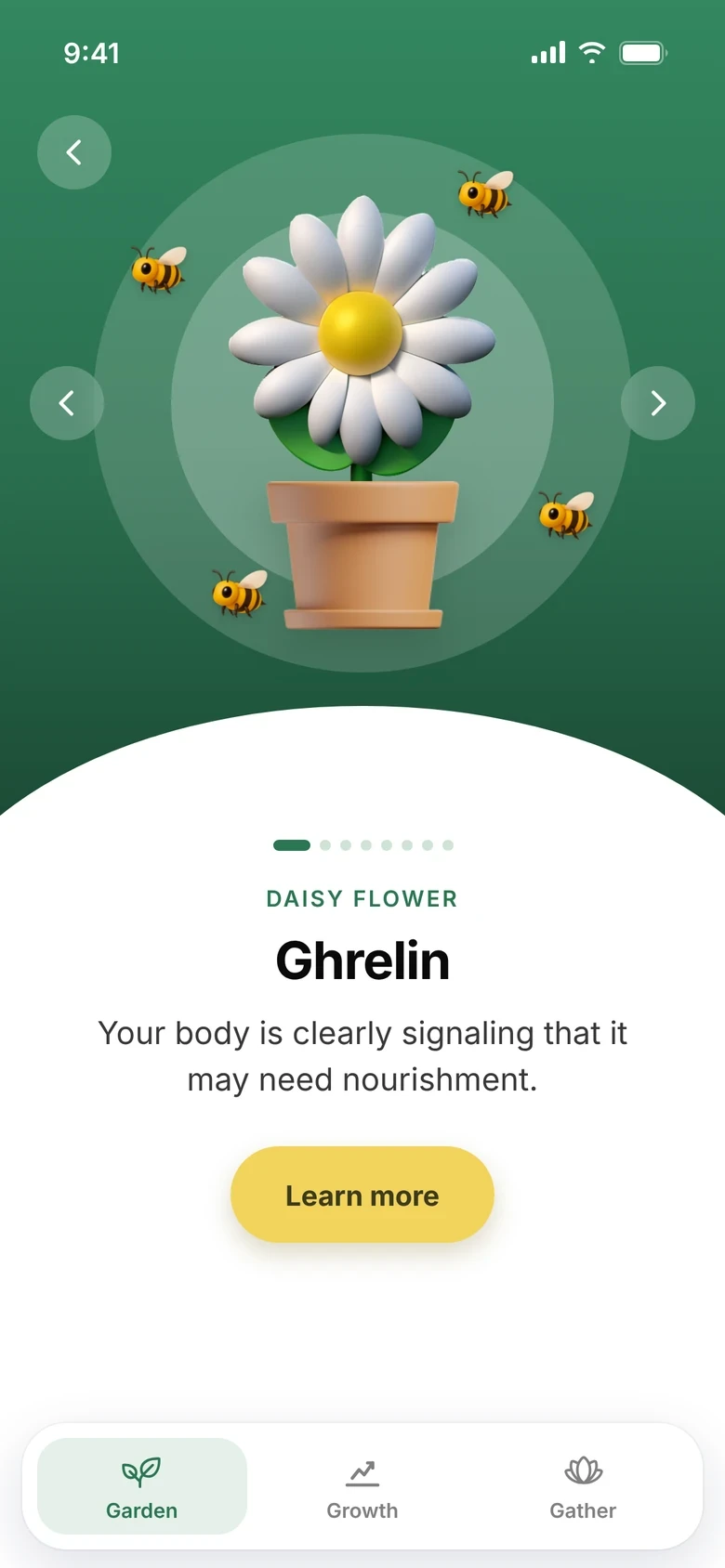
Hunger shows up as bees, not numbers
When the patch detects hunger, bees start buzzing around the flower. It’s a gentle visual cue, with no alarming numbers or red-and-green verdicts.
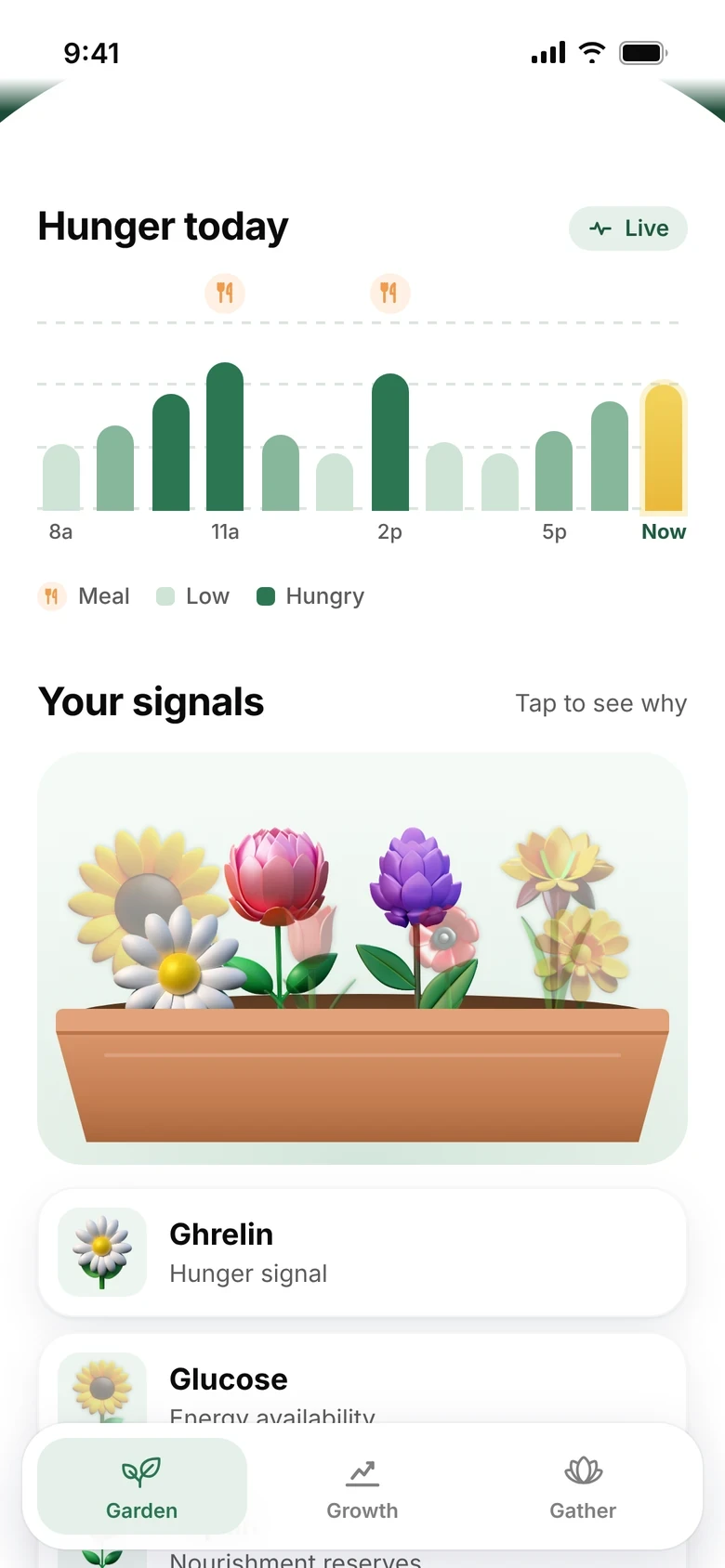
Home
Making an invisible signal visible
Ghrelin, the hunger hormone, sends a signal people with anorexia often can’t feel. The hunger chart shows when hunger rose and when the last meal was, so it’s clear when to eat next. Below it, each chemical behind hunger is its own flower: the body is a garden to tend.
Flower reading
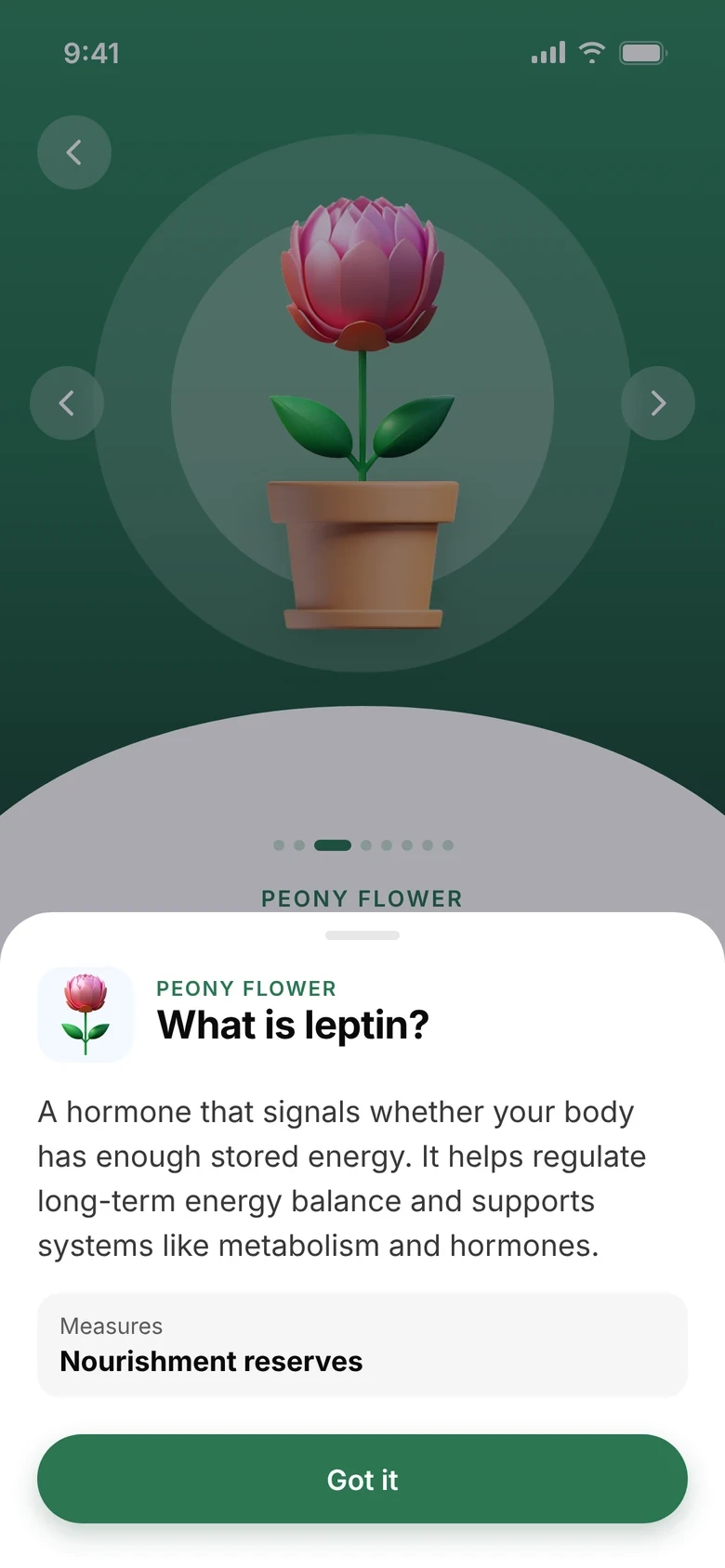
Each flower is a signal
Every flower shows what one chemical is saying. Full, saturated colour means a healthy reading; a faded, see-through flower needs attention. “Learn more” explains what each chemical does.
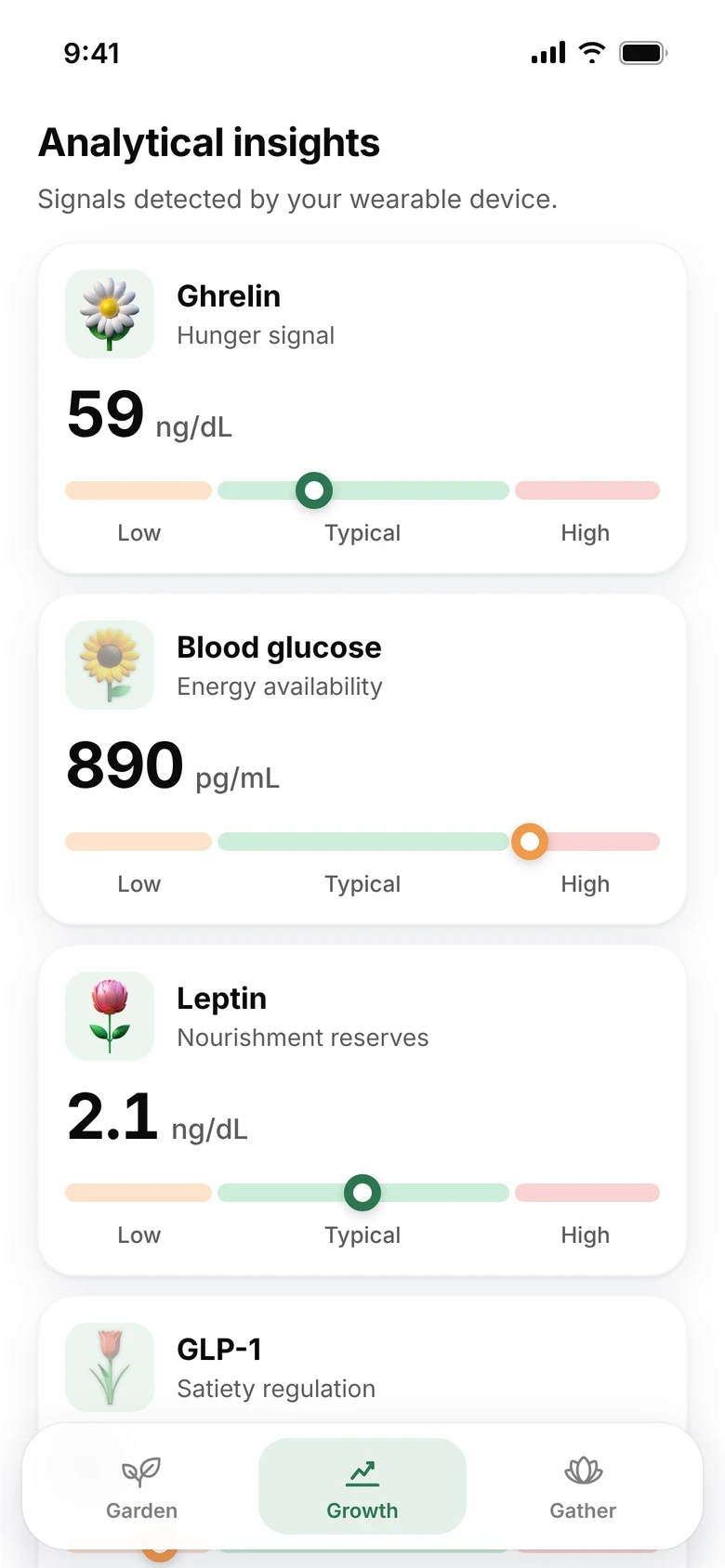
Growth
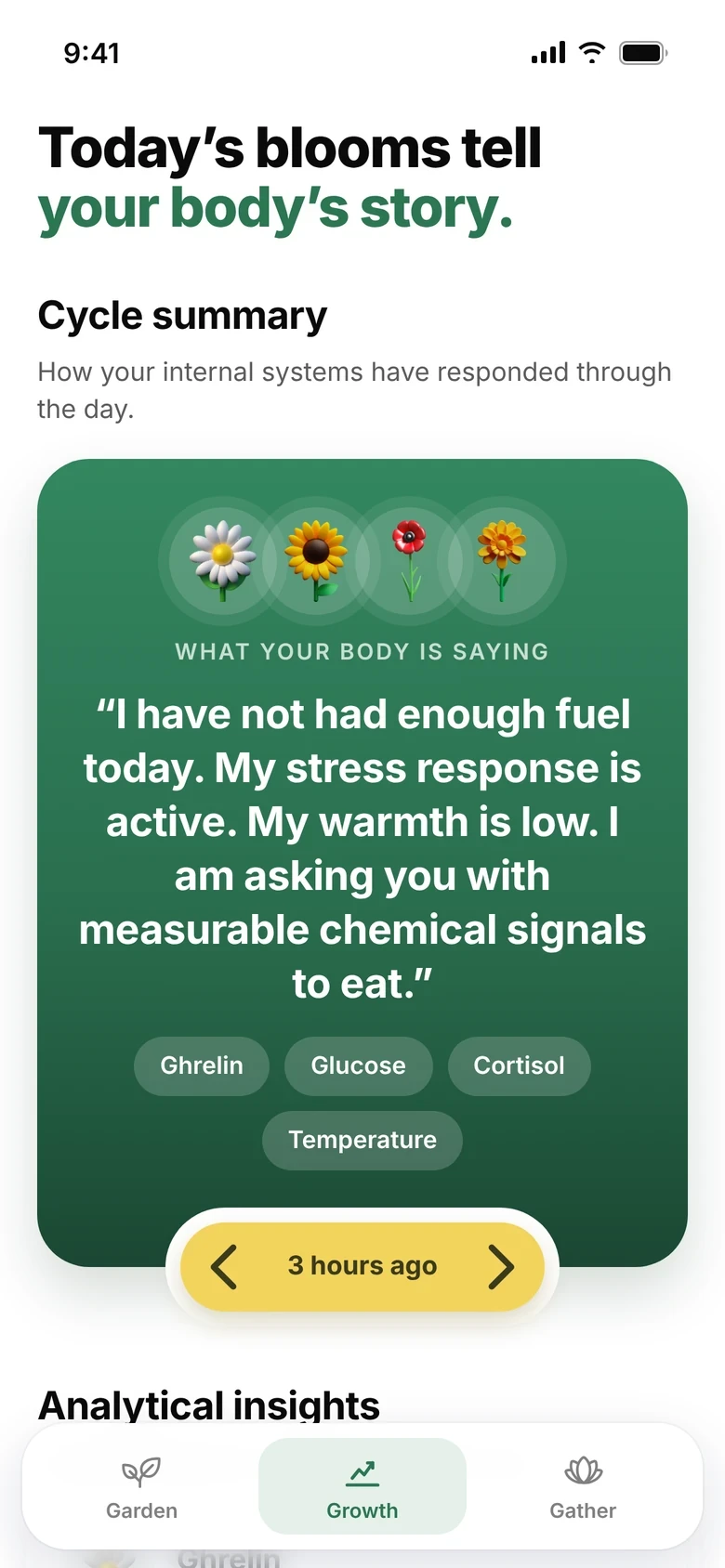
The whole body, not just hunger
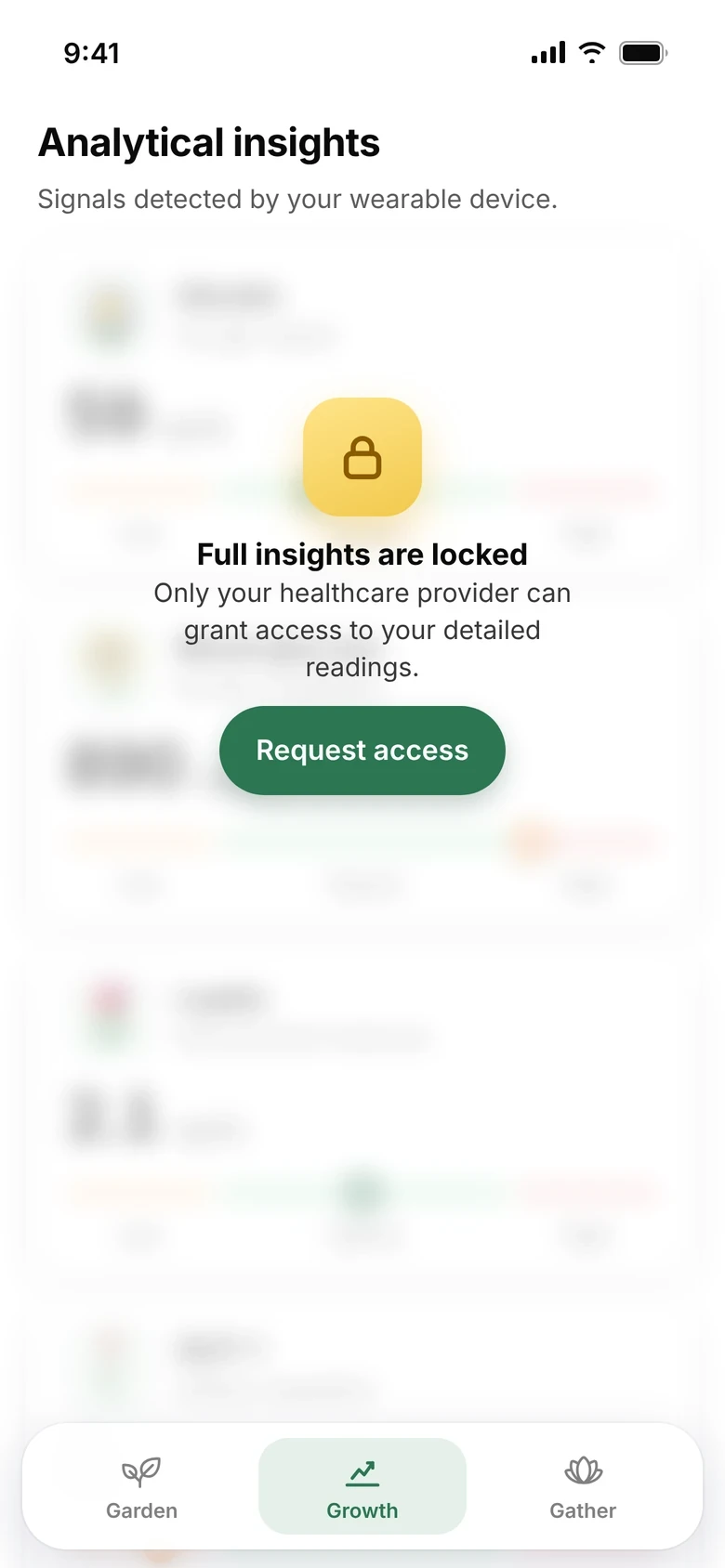
Growth shows how all the signals work together. Detailed numbers and ratings, which can feel frightening during recovery, stay locked until the doctor grants access, once the patient is ready to see them.
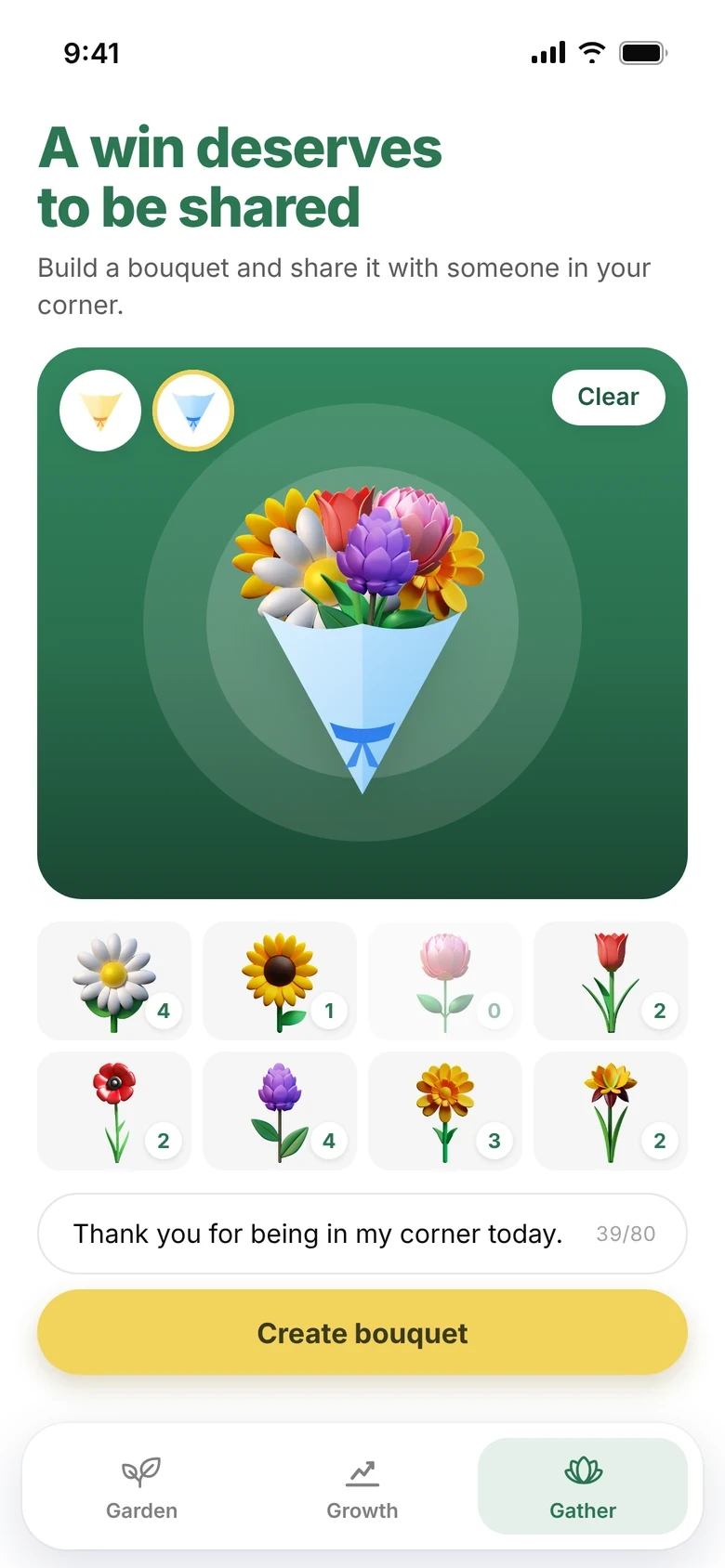
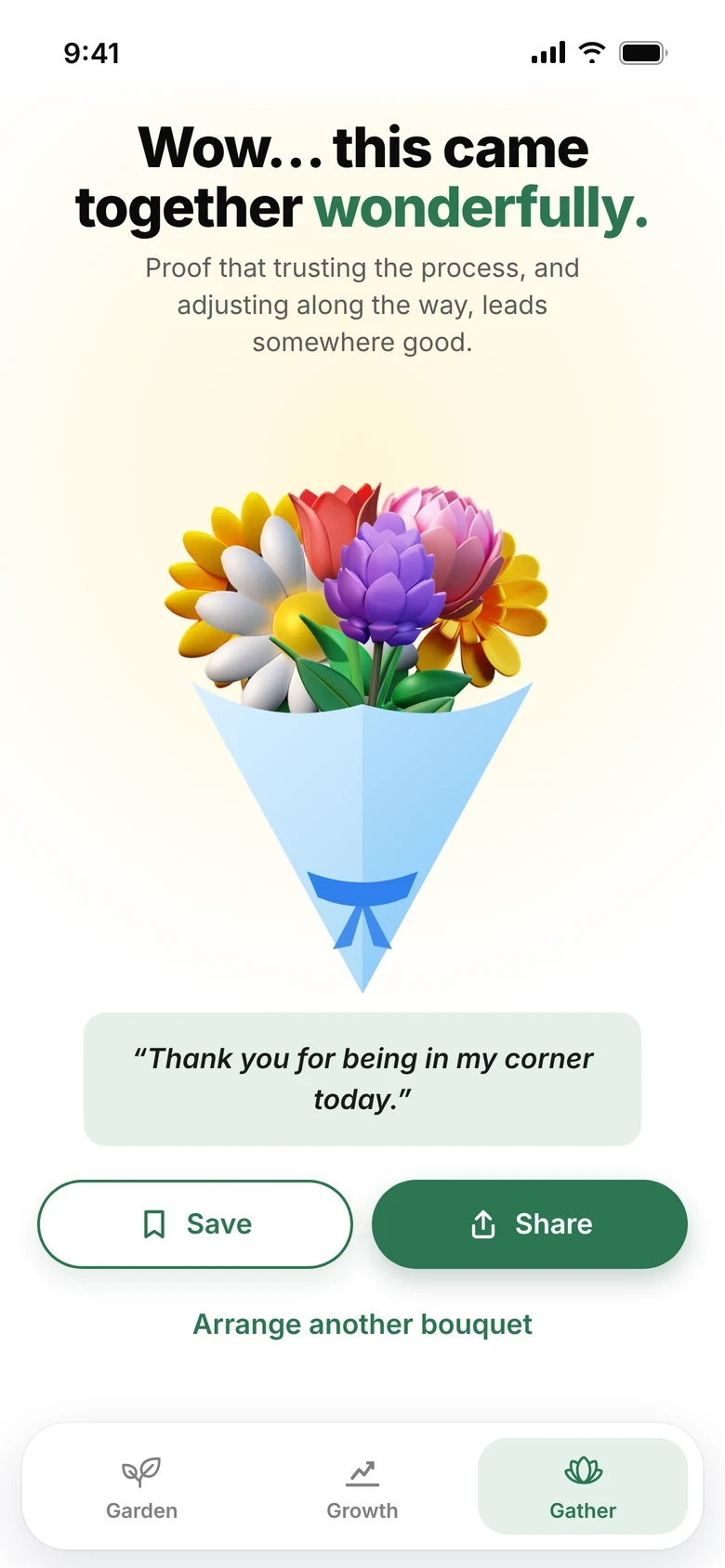
Gather
Sharing progress without the words
Build a bouquet from today’s healthy flowers and send it to someone close. Loved ones see progress without a hard conversation, which eases their worry and helps recovery feel normal.